The death of a star and the void it leaves behind

It’s been a year since we lost Sushant Singh Rajput [SSR], probably one of Bollywood’s smartest, prettiest and most talented actors of our times — to the menacing hands of mental illnesses. [This is discounting all that his ‘SSR-Armies’ believe in]

A year into his death, it still feels unreal — like a delirious thought, and this is for someone who didn’t even qualify to be his fan. I’d probably watched 4-5 films of his, and was mildly smitten by his good looks and was low-key swooning over his acting prowess. But I didn’t know anything beyond that, and I still don’t. Except the fact that he was mentally ill. Just like me. But I remind myself every day not to reduce him to just a star and his illness. There was more to him than just that, he was a son, a partner, a brother, and an icon, to thousands of ardent fans.

At a personal level, however, his death is a reminder of how precious life is, and how death brings out the unspoken love that people harbour in their hearts towards us and is a reminder of my precarious reality and the gaping potential to meet an end like his. It is both terrifying and comforting. Terrifying, because no one wants to be told that they might die by suicide, but it is comforting because you know you won’t be alone — that you too will end up wherever all the other people who die by suicide end up going.

And turns out I am not the only one. People who die by suicide, trigger a slew of suicide contagion-like behaviours and that is what makes mental illnesses so sinister. It should be feared, just as much as we now fear the COVID 19.

However, it’s quite a slippery slope, because at one end, we are trying to de-stigmatise mental illnesses, dispel the fear around it, but that often comes at the cost of romaticising being mentally ill. It is an age where youngsters think ‘therapy is cool’. Therapy is far from being cool, it is painful, expensive and harsh. Taking ‘happy pills’ doesn’t make you cool [and let’s not forget, they that seldom do what they claim to do]. They aren’t magic drugs that offer an instant surge of boundless joy, They merely bring some semblance of stability, that too at the cost of weight gain, chronic lethargy and emptiness, amongst a panoply of other side effects.

What is needed, is to view therapy and psychiatry the way you’d view someone going to the dentist’s or to the orthopedics’ clinic. In a clinical and sterile manner, instead of suffusing coolness into the equation.

And to know that there is seldom any panacea for these conditions, the pain never goes away, one simply learns to live with it. Just the way the hollowness in my chest left behind by the demise of SSR still persists. On most days, it is like the ebb and flow of calm beach waters, but on some days, it hits me like a tsunami, bringing along with it, feelings of disbelief, jealousy, angst, and heartache. Disbelief, because it is easy to assume that fame and fortune are guarantors of happiness, why would someone who had both, end his life? Jealousy, because he did what I have always wanted to do, but feared to do. Angst, because of the fear that I might do what he did, at some point in my life. Heartache, because there are no solutions to this emotional conundrum that pans out like a labyrinth, and that regardless of all the #justiceforSSR tweets & discussions, he simply isn’t going to come back. And that’s the worst feeling of them all.

All this is startling given the fact that I was in no way connected to him, or acquainted with him, but if his death could leave behind such a void in my [an abject stranger’s heart], I can’t begin to imagine what his family & close friends must have gone through and must still be going through.

And then come the fans. Who have been at the fulcrum of a lot of mud slinging for believing that the actor’s death was not by suicide, but an act of homicide. By whom? No one knows, at least not yet and we probably never will. But it is easy to dismiss their grief as something that is rooted in ignorance and naivety. Sitting on our high horses of being woke about mental illnesses, we often fail to see the power of trauma in suspending reality, and in submerging someone in the pool of disbelief. Maybe a little bit of sensitivity towards them, as they trudge their way out of this shattering loss would be one step closer in honouring the dead man’s spirit.

Hopefully, he is healthier and happier, wherever he is now. And hopefully each one of us gets the courage to process the grief [however big or small], left by his death, without ever forgetting what it taught us.

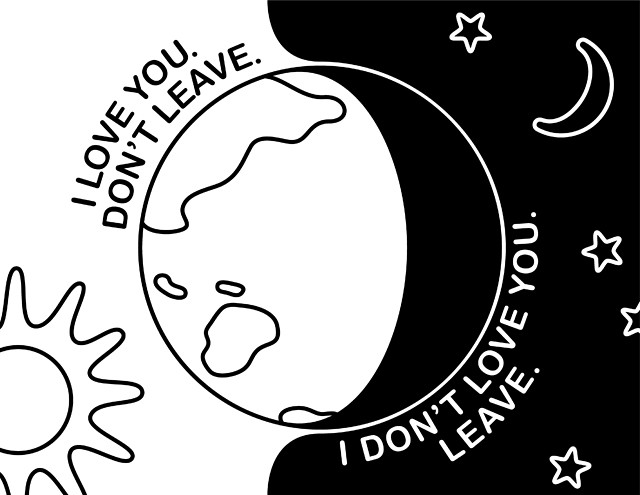
Goodbye, favourite person

I am not breaking up with my favourite person, but today is the day I cease to let them be my favourite person. I don’t need them to be my favourite person, hell yeah, I don’t need anyone to be my favourite person. And this is probably the bravest thing I’ve said in a long while.

It hurts, it’s like someone has ripped the bandaid off and now there is a think film of pinkish skin that I crawling its way up, and it stings, but I finally can feel my skin, and that is priceless.

I don’t know how I am going to function. I have spent a good decade having a favourite person, and it’s hard to imagine a life devoid of that. It’s a bubble, however. Or so I have come to realise. And that bubble has popped, and I am okay with it, rather surprisingly.

This is no means is to disrespect my favourite person (should I add ‘former’?), but it’s a way of distancing myself from them, for sake of their sanity and mine. I am severing them off of me, and it’ll leave a scar, but it will heal. Or so I believe. I need your support, this isn’t easy for me at all. But I think it’s for the best.

Why BPD is the worst mental illness

I consider myself the potpourri of mental illnesses. I was initially diagnosed with schizoaffective disorder, then it was annulled and replaced by bipolar disorder and BPD, along with the garden variety of mental illnesses like anxiety, and OCPD. And I think that leaves me experienced enough to comment on why BPD is by far the worst and most debilitating mental illness.

  • BPD is psychological. Medication seldom works beyond a point. It is a result of years of trauma, mental/physical abuse which wires your brain in a particular way. Rewiring it is far from easy.
  • Mental health professionals brandish people with BPD as ‘attention-seekers’, as ‘dramatic’, as ‘master manipulators’. There is stigma within the mental health community and therefore getting help isn’t easy.
  • BPD leaves you on a rollercoaster of emotions, often triggered by the smallest and most insignificant events.
  • If you have a favourite person, you are doomed. Having a favourite person implies relying on one person for the smallest of things, seeking their validation, appreciation and affection at all times of the day. This can be a romantic or a platonic relationship, characterised by a harrowing fear of abandoment.
  • BPD makes you think black or white, either I love you or I hate you. It’s all or nothing.
  • It makes me unpredictable to myself. I have no idea of how I will view myself, the world, my family, my friends, my favourite person an hour later.
  • We feel things too deeply. We pick up on the slightest of signs, one missing smiling emoji, one wrongly worded text, sends us on a sprial of gloom and doom, which is deeply distrubing to the point of tipping into the vortex of suicidality.
  • We are our worst enemies. We love everyone deeply, except ourselves.

I frankly don’t mind being bipolar. My manic highs are what I live for, and they’re worth all the suffering that comes along with a depressive episode. But BPD, I wouldn’t wish it upon my worst enemy. Of that I’m certain.

Dear favourite person,

I am back again. Yeah, back once again to bore you with my ‘I love you so much’ confessions and ‘Please promise me that you won’t leave me’ ultimatums. But this post isn’t about me, it’s about you. Your patience, your kindness, your gravity, all of which allow me to exist in your universe without for once being made to feel like I’m unwanted.

Yet, my brain tells me that this is the last time we’ll speak. That you have reached your tipping point. That today is the day you abandon me. And it crushes me, so much so that I just want to die. I just want to jump outside from my balcony because the realisation kills me. But then, a rational part of me gets angry at me, and to some extent you, for making me feel this way (even though you’ve done absolutely nothing for me to feel this way).

Another reason I feel so, is because I am acutely aware of how irrational I am being and the nature of unreasonable pressure I’m subjecting you through. Which makes me hate myself even more. And sometimes makes me hate you as well. Not like it’s your fault, but somehow it is, because I cannot hate you no matter how hard I try.

I wish I could sever you off of me, but the very next moment I want to die. My very existence is pivoted around you and that is so grossly unfair to the both of us. For me it’s all or nothing. I want you so badly. (I mean this in the most platonic way) but I also want to stop obsessing over you the way I do. When you speak to me, I spin into a mini-manic episode. And when you leave me on seen, it’s the end of the world.

But I write this, unsure of whether I will share this with you ever, but with the hope that I will somehow, someday establish healthy boundaries in our relationship and learn to respect and uphold that, for the sake of both of our sanities.

And until I get there, I need you to put up with my blind love, idolisation, clinginess, recklessness, and abject madness. I am trying. I promise I am, it takes everything in me to not push the send button, to hold it back, to suppress the dying urge to just ask you for attention, validation, and affection. But I am trying and I will continue to try, for as long as I am alive.

Love, (Sorry for this)

Milana

The illness that brings us together

I hate being bipolar, I hate what comes with it, the excruciating lows and the often dangerous highs. But what I love the most about my illness and something that I’m deeply grateful about, is the friends I’ve made in this journey.

So we have this Instagram page of people with Bipolar Disorder, from all over the world and though we’ve never met each other (and probably never will), we’ve shaped each others’ lives so profoundly.

A part of this is because neurotypicals will simply never understand what it is like to live with this madness everyday, to fight your demons every minute of your life and to take five different pills everyday to be functional.

My friends from the internet have helped make this battle easier for me. Their reaffirming words and constant encouragement makes me feel less lonely and more understood. And for that, I’m so grateful.

We bond over having the same medicines, same side effects, and most importantly the same diagnosis. And even though people say a diagnosis is just a label, it is more than that, it is an indelible part if your personality which can seldom be disregarded.

I am so thankful for the group-chat that exists and to each and every single ‘friend’ who has been so kind and generous to me despite never having seen my face.

Types of reactions I get when I tell someone I’m mentally ill

  1. I have mood swings too! Do you think I’m bipolar? (No, I think you’re stupid, and insensitive, and self obsessed)
  2. Everyone has mood swings, have you tried meditation or yoga? (I have specifically been told not to meditate by multiple psychiatrists, now what?)
  3. OMG, I’ve never met anyone who is so vocal about their mental health. (I overshare, it’s a part of my illness)
  4. You don’t look mentally ill. (Perhaps I should get it tattooed)
  5. So, you’re basically that girl from Girl Interrupted? (Yeah. Suck it up)
  6. Do you hallucinate? (Yeah, I get the effects of meth without actually using it)
  7. You know psychiatric meds alter the brain chemistry, right? (Do you realise, there is a problem because the brain chemistry has gone awry?)
  8. Why are you bipolar? (Yeah bitch, I was bored so I picked this illness)
  9. I’m so proud of you, you’re so brave (Thank you, someone who talks sense after a long while)
  10. When will you get better and get off medication? (Does it look like I have an answer?)

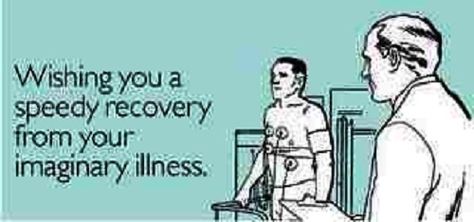
Am I faking it?

This is the most personal post I’ve written so far. Trigger Warning: Mention of self harm

I really wish there was a thermometer to check for a mental illness, because only that could put an end to my perennial question of whether my illness is real or whether I am a master manipulator to have conned multiple mental health professionals. I wonder if I am over reading into the signs, mistaking plain sadness for depression and general worry for anxiety.

I try to cut myself, kill myself, but in vain, hoping at least that will prove to no one else — but to me, that this pain and this suffering is real. Or maybe it’s not. I don’t know. I ask myself if my symptoms are a consequence of reading too much on the internet or whether they are actually real. Maybe I have Manchausen Syndrome! (Yeah, watch Sharp Objects to know what that is)

As I write this terribly unsettling post, I find my heart racing. Wondering if my worst fears come true. Is it just me? or do you feel this too? Maybe I am just a fucking liar.

But then I remind myself of wanting to die at 11, pretty sure I wasn’t faking it then, and pretty sure I didn’t even know what bipolar disorder was. I remind myself of thinking that my mother would poison me when I was 5, surely a 5-year-old wasn’t cooking that shit up. I have to remind myself again and again, I couldn’t have possibly conned four therapists and three psychiatrists. Right?

OCD in the time of the CoV

The Cororna virus is the talk of the town, nay, the world and it can be an incredibly scary time to be someone suffering from OCPD or germophobia or both. On one end is the fear of contracting it, and on the other end is the fear of transmitting it, which can both be terribly harrowing. As I write this, I hear someone coughing in some corner of the office, and I can’t help but wonder, if this is the dreaded CoV lurking around, waiting to pounce on me.

What’s even worse is my aversion towards anyone who has the faintest semblance of being sick, including my own family members (who haven’t been keeping too well of late). And I can’t help but wonder, if this makes me the worst person to have walked on this planet, given my abject lack of altruism and gross fear towards someone who is simply unwell (for no fault of theirs).

I want to arm myself with a mask and sanitizer at all times, keep any remotely sick person away from my bay, but I’m also afraid of being judged, of being seen as a lunatic who cannot stop obsessing over germs and contamination, and of being misunderstood for a heartless neurotic who cannot feel any empathy. Unfortunately 150 mg of sertraline isn’t helping much either. The fear is real and the paranoia is all consuming.

How are you coping with this debilitating feeling? Sometimes, I wonder if being hypomanic would help, if it would shield me with a sense of invincibility, but when has it ever arrived at a time when it’s needed the most?

Story of the senile memory

I am writing this post because I forgot what I was supposed to be writing originally. But that act of forgetting made me realise and wonder if memory loss is a side effect of my medication or if it is a symptom of my illness.

I had a fairly good memory as a child, I could remember lines of poetry, multiplication tables and story plots with remarkable accuracy. But as I grew up, all of it plummeted and eventually turned senile. I graduated a couple of days ago, and I don’t remember a word of what I’d studied. Whether it is what Foucault had to say or whether it was a piece of text from Manufacturing Consent, it’s all gone.

I also have this weird problem where I can’t distinguish between my dreams and reality. For example, I dream that I have received a text and that I replied to it; while in reality, the text remains unopened in my inbox, waiting to be addressed. It’s a small and slightly petulant example, but use the same factor to compound the magnitude of its effects.

How do you guys deal with a bleak memory? I’ve tried to counter this by buying a fancy planner, using tons of sticky notes, keeping reminders on my phone and even consuming Omega 3 (Because I read somewhere or heard from someone that it boosts memory, or am I imagining it?) But none of them help. And the worst part is, people never take you seriously when you tell them you have a weak memory.

I am told, “You’re so lucky! You don’t have to remember the bad parts.” But I don’t remember the good parts either! And you know what? That sucks. That sucks colossaly. I have literally talked to the girl who bitched about me a week after we broke into a fight, because I don’t remember it anymore. And that is plain embarassing.

I did Google at some point to see if this is a consequence of my medication and I don’t seem to remember the answer. I could Google again, but then… fuck it.

Perils of a faulty diagnosis

One of the most common issues faced by most mentally ill individuals is the problem of an ever changing diagnosis. My first doctor diagnosed me with schizoaffective disorder (Which was bizarre, given I’d never in my entire life hallucinated or had a full blown psychotic episode). What was even worse was her way of diagnosing me. I was administered a pen and paper test with multiple choice answers that purpoted to the fact that I was schizophrenic. But something in me always had an inkling that I’d been misdiagnosed.

Quizzes don’t tell you if you’re mentally ill or not!!!

Much later I got diagnosed with Borderline Personality Disorder (BPD) and then eventually, with bipolar disorder. Things finally make sense to me. This diagnosis was arrived upon after regular meetings with my psychiatrist who saw me through all my phases before jumping to the conclusion and branding me with a label. And that’s how it’s meant to be.

With all due respect to Freud, a stupid ink blot test and a bunch of questions cannot reveal an illness, sure, they speak a lot about one’s vivid imagination and whacked out of the box styled thinking, but relying on only that as a parameter to gauge an illness can more often than not prove to be detrimental to the client.

Worse, when you’re told you have a particular illness, the symptoms become that much more pronounced. You either start noticing them more profoundly or you start showing them as a self fulfilling prophecy. I cannot reinterate this enough, a faulty diagnosis is dangerous.

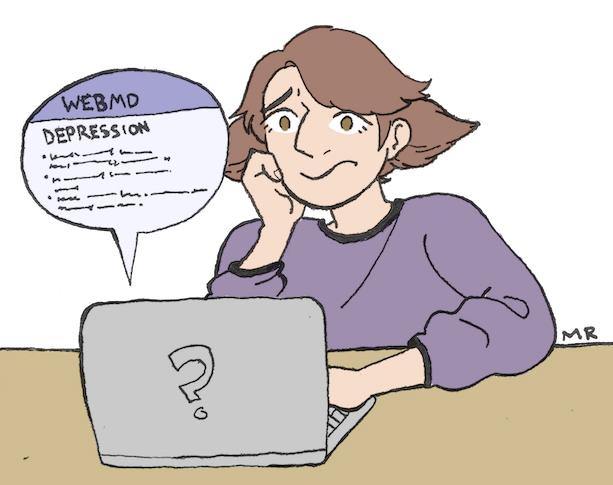
If you’re worried about your diagnosis, don’t hestitate to Google your symptoms. Most doctors would hate me for saying this, but you are the best judge of yourself. You know best of what’s happening in that mind of yours, so don’t hestitate to take charge of it. Yes, it’s an equally foolish thing to self diagnose yourself, but that’s not the point of Googling; the point is to verify and confirm for the sake of your own sanity. So if you’re iffy, go acquaint yourself with WebMD and read up. See if the dots connect, if the pieces of the puzzle fit to paint the correct picture, and if not, take it up with your shrink. Tell them you did some research and that the values don’t add up. Take charge. Please.

Design a site like this with WordPress.com
Get started